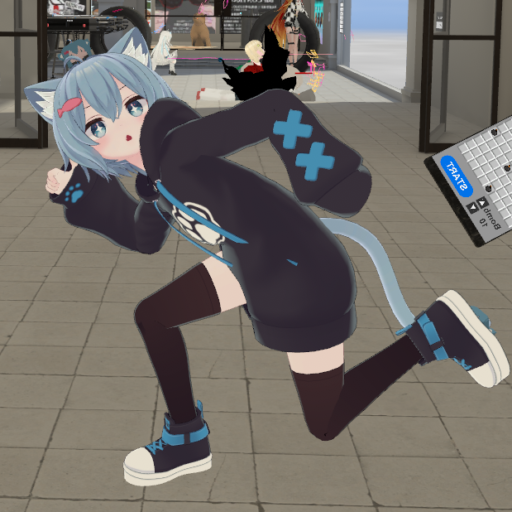
*This article was created using voice input with AI (Aqua Voice) for text conversion. Please note there may be some inconsistencies.
The Real Meaning Behind “Nekoyama Nemu” — Performance Rights and Full-Body Tracking
Hello. How’s everyone doing?
I’m Hiro from Full Body Tracking Lab.
Today I want to discuss a topic that sounds provocative but actually leads to a serious legal and cultural question about performance rights in VRChat.
In VRChat, when you use full-body tracking, your physical movements are transferred to your avatar in real-time. This raises a fascinating legal question: who owns the “performance” happening on screen?
The avatar’s visual appearance is protected by copyright — it belongs to the creator. But the movements? Those come from the real person wearing the trackers. The combination of someone else’s visual creation and your physical performance creates a hybrid that existing law hasn’t fully addressed.
Full-body tracking essentially means that your body is performing through someone else’s character design. This creates two layers of rights: the visual rights of the avatar creator and the performance rights of the person moving.
For casual VRChat use, this distinction doesn’t matter much. But for commercial performances, professional streaming, or theatrical works in VR, understanding who owns what becomes critically important.
This is one of the most interesting legal frontiers that full-body tracking has opened up. As VR performance becomes more professional and commercially significant, these questions will need answers.
Thank you for reading! Please follow us on X and subscribe to our YouTube channel!